Sound Healing Teacher Training
Our Sound Healing Teacher Training in Rishikesh offers a traditional and practical approach to working with sound for healing, meditation, relaxation, and inner awareness.
The training explores the therapeutic qualities of sound through Nada Yoga, mantra, singing bowls, gongs, voice, vibration, and other traditional sound practices. Students learn how sound interacts with the body, breath, mind, and subtle energy, while developing the skills and confidence to guide sound healing sessions for others.
Throughout the course, you will learn how to work with different sound healing instruments, create healing soundscapes, use rhythm and resonance with intention, and structure individual and group sessions. The training also introduces meditation and yogic practices that help develop sensitivity to sound and a deeper understanding of inner listening.
A strong emphasis is placed on practical experience. Students have the opportunity to practice techniques, receive guidance from experienced teachers, and gradually develop their own approach to conducting sound healing sessions.
The course is suitable for yoga teachers, wellness practitioners, musicians, meditation teachers, therapists, and anyone who wishes to develop a deeper relationship with sound and learn how to share its benefits with others.
Held in the spiritual surroundings of Rishikesh, the training provides a space for study, practice, self-exploration, and connection with the living tradition of Nada Yoga.
Understanding sound as a healing practice
Sound has always held an important place in the yogic traditions of India. Through mantra, chanting, sacred music, meditation, and Nada Yoga, sound has been used as a means of directing attention inward and cultivating a deeper awareness of the self.
During the training, students are introduced to this traditional understanding of sound while also learning practical approaches used in contemporary sound healing sessions. The course encourages students to experience the practices themselves before learning how to offer them to others.
You will explore how different sounds, frequencies, rhythms, tones, and vibrations can influence the experience of the body and mind. Attention is given to the quality of listening, the intention behind a sound, and the environment in which a session takes place.
This creates a deeper foundation for working with sound and helps students approach sound healing with awareness and responsibility.
Learning to work with sound healing instruments
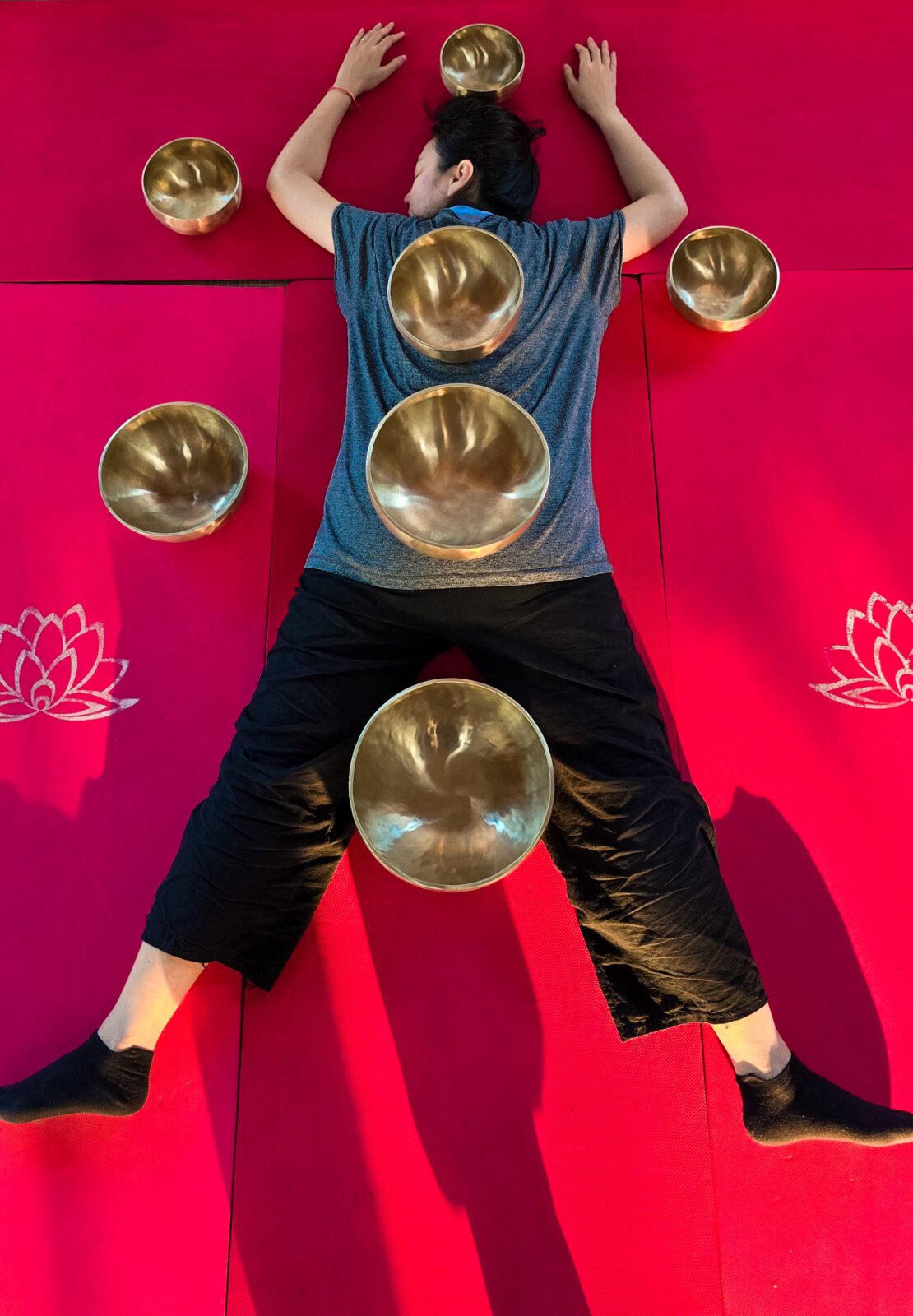
A central part of the training is learning how to use sound healing instruments with proper technique and awareness.
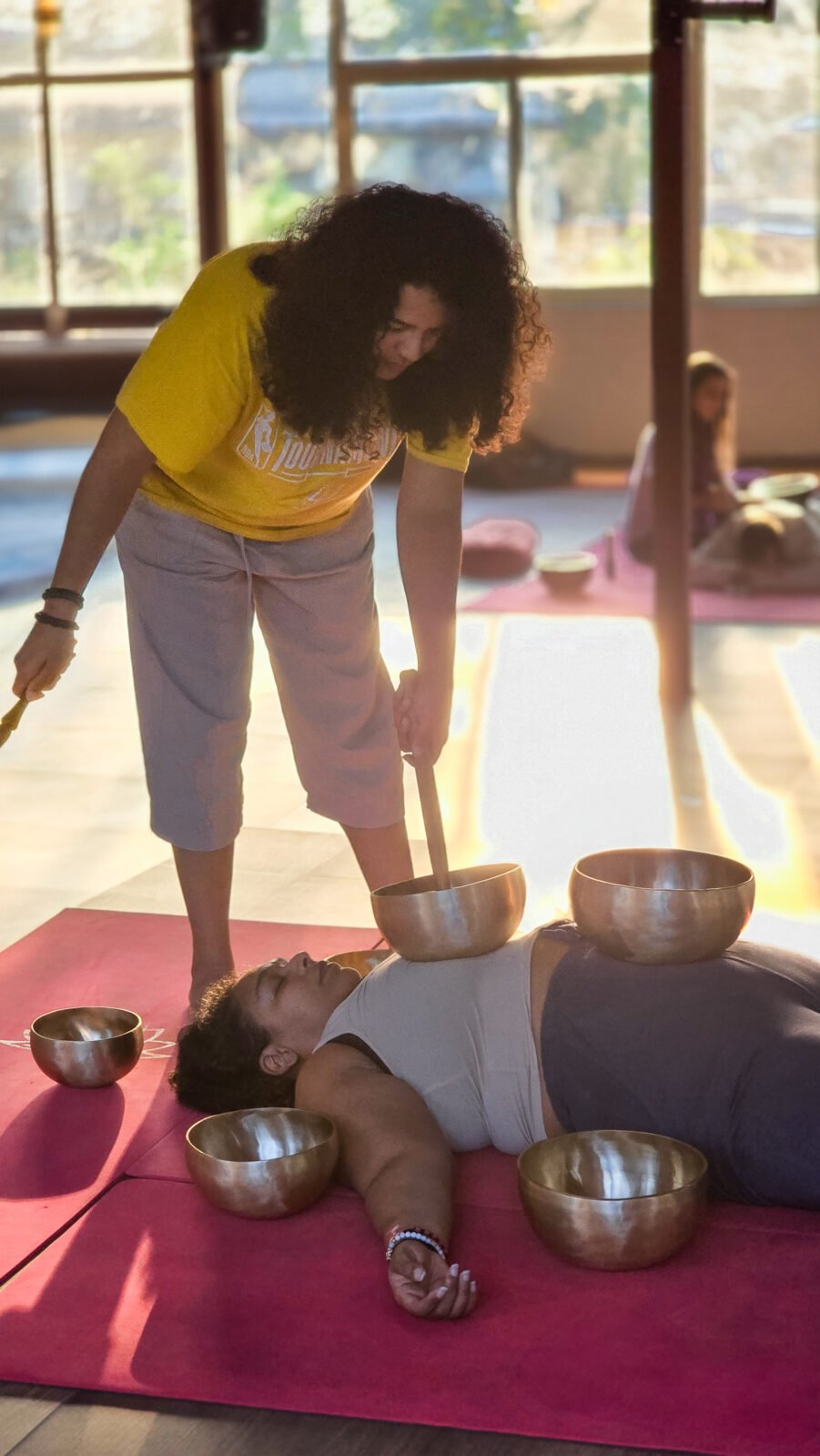
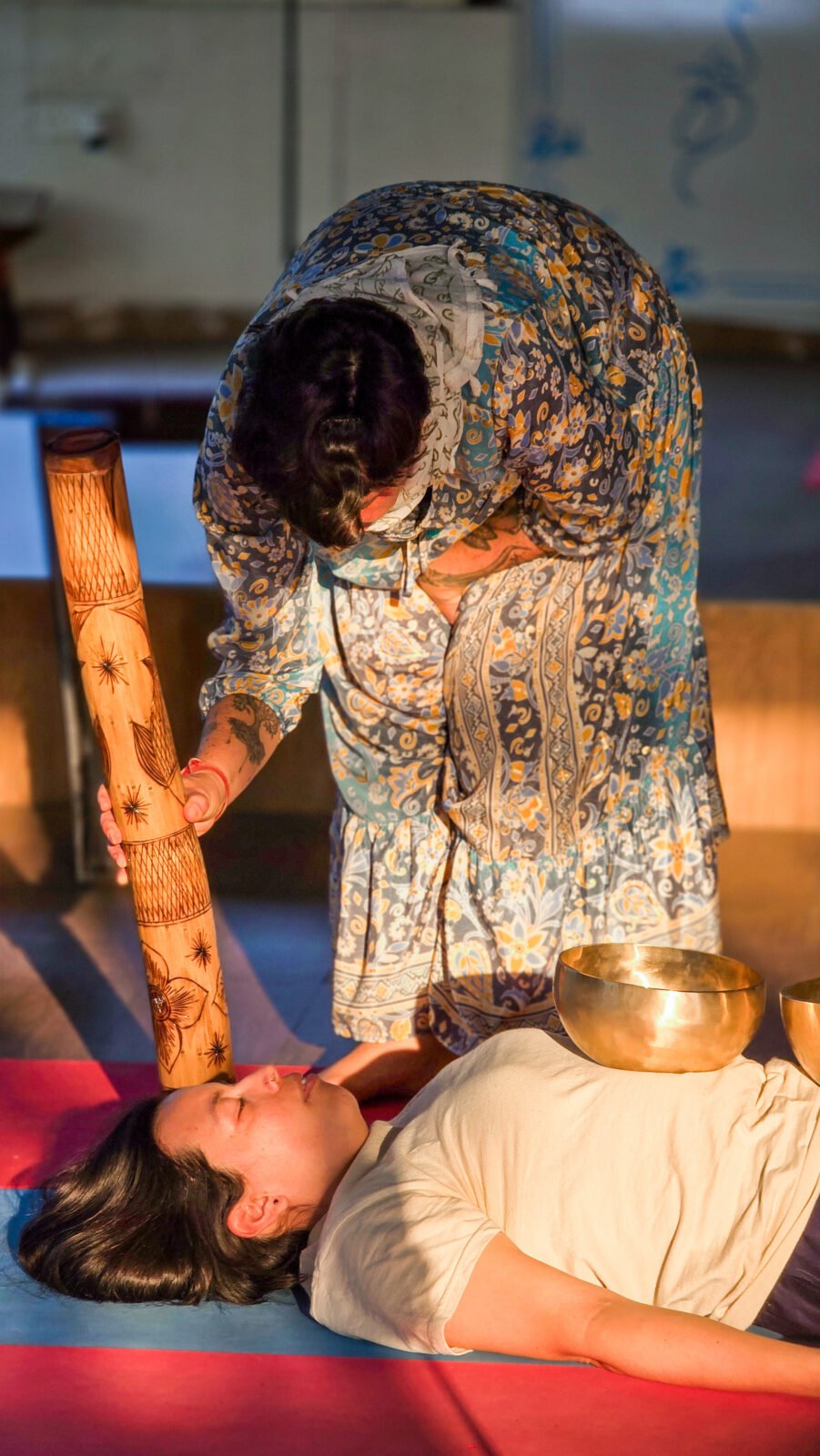
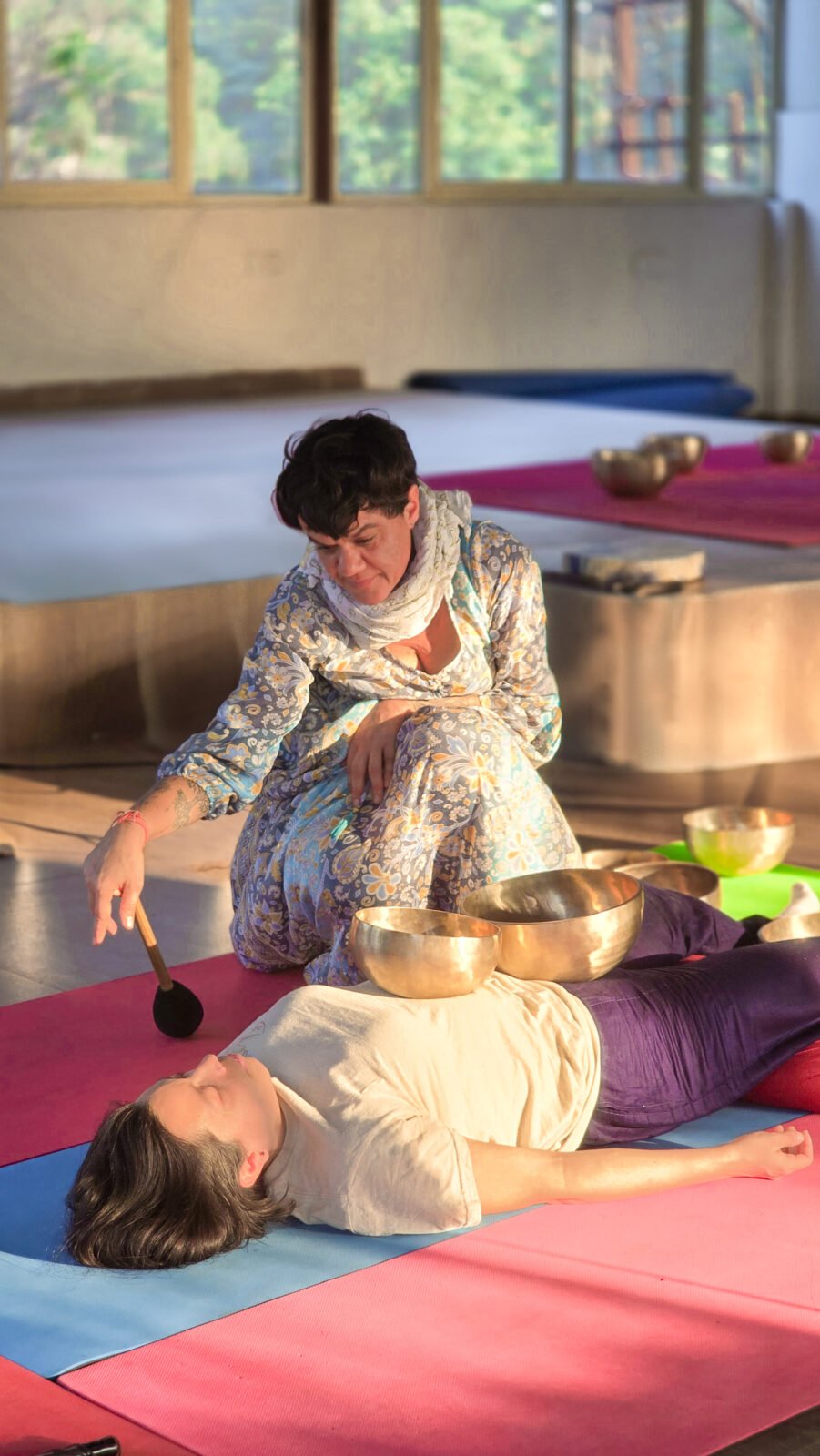
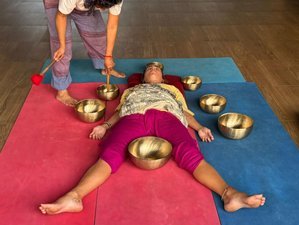
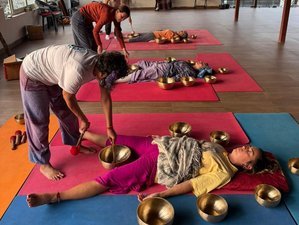
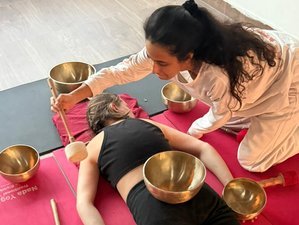
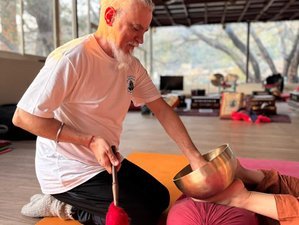
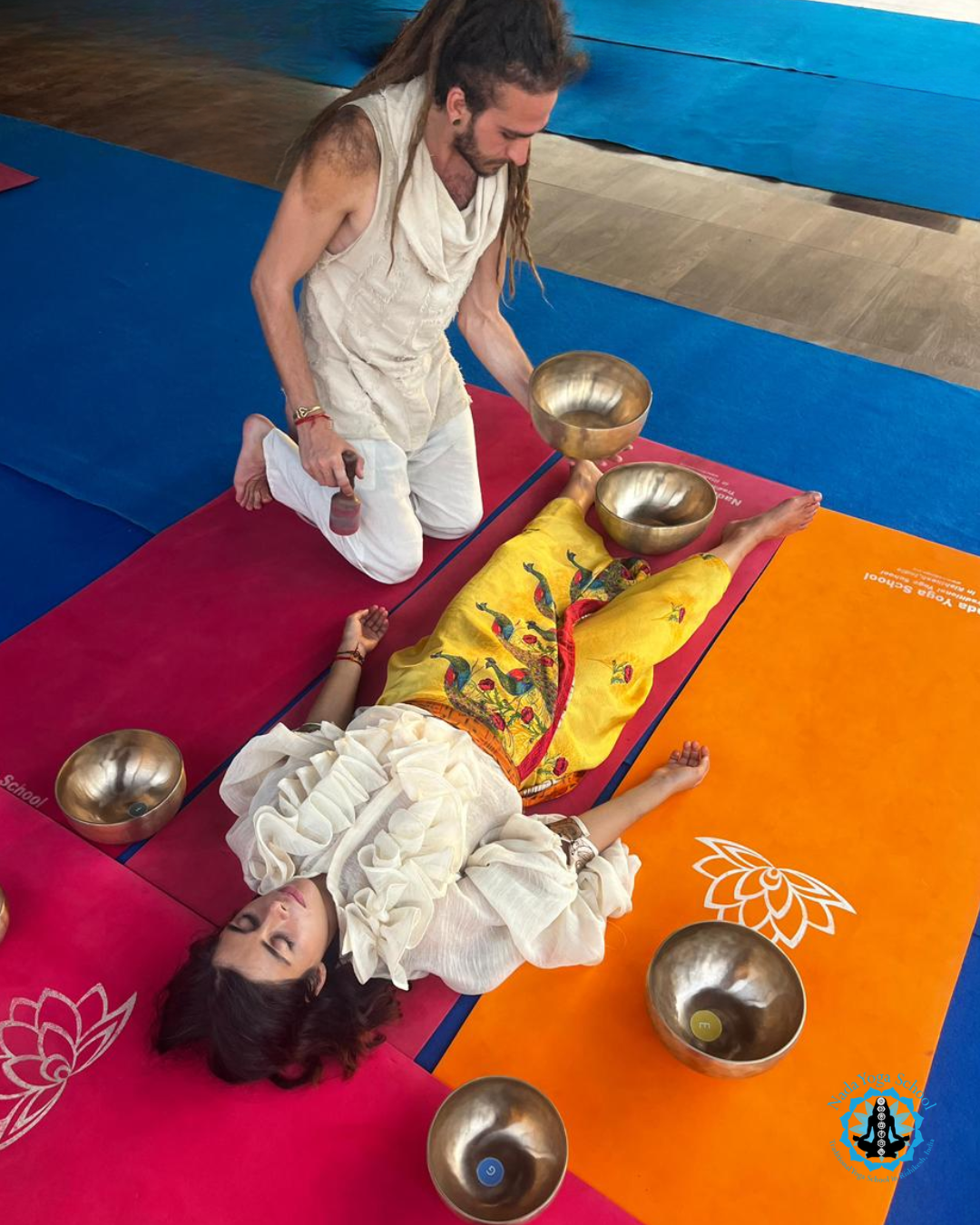
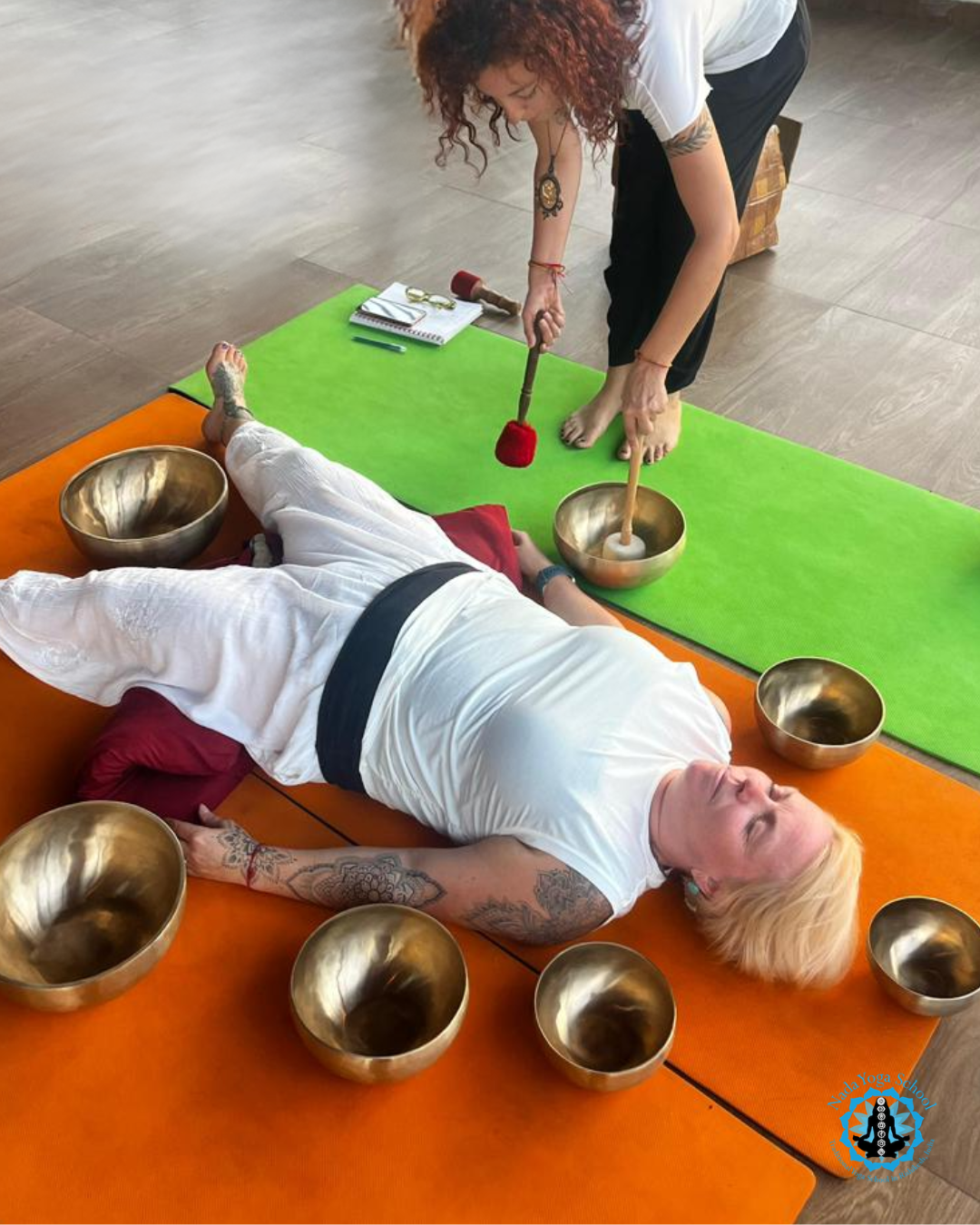
Students receive practical guidance in working with singing bowls, gongs, bells, chimes, drums, and other instruments used during sound healing practices. You will learn how to produce clear and resonant sounds, understand different playing techniques, and use instruments appropriately during meditation and healing sessions.
The training also explores how instruments can be combined to create a balanced sound environment. Students practice developing sound sequences, transitions, pauses, and periods of silence so that a session has a natural flow.
Rather than focusing only on producing sound, the training encourages you to develop the ability to listen carefully and respond to what is happening during a session.
The role of the voice
The human voice is one of the most accessible instruments available to us. For this reason, vocal practices form an important part of the training.
Students explore chanting, mantra, toning, vowel sounds, breath-supported vocalisation, and other practices that develop awareness of the relationship between breath, voice, vibration, and concentration.
You will learn how to use the voice in a simple and accessible way during sound healing and meditation sessions. These practices can also help students become more comfortable with their own voice and develop greater awareness of pitch, rhythm, resonance, and silence.
The training places particular value on listening to the natural quality of the voice rather than trying to achieve a particular performance.
Nada Yoga and inner listening
Nada Yoga provides an important philosophical and experiential foundation for our approach to sound.
The Sanskrit word Nada refers to sound, and Nada Yoga is traditionally described as a path of awareness through sound. The practice gradually directs attention from external sound toward subtler forms of listening and inner awareness.
Students are introduced to the principles of Nada Yoga and its place within the broader yogic tradition. Through meditation, listening practices, mantra, and guided exercises, you will have opportunities to experience sound as a tool for concentration and introspection.
This perspective gives the training a deeper foundation and helps students understand why listening itself is such an important part of sound-based practice.
Meditation and sound
Sound can provide a natural point of focus for meditation. A sustained tone, a repeated mantra, the resonance of a singing bowl, or the sound of the breath can help bring attention into the present moment.
During the training, students learn different ways of incorporating sound into meditation practices. You will explore guided sound meditations, mantra meditation, vocal practices, instrumental meditation, and periods of silent listening.
You will also learn how to prepare participants for a sound meditation, guide them through the experience, and bring the practice to a gradual and grounded close.
Creating and guiding sound healing sessions
Learning individual techniques is only one part of becoming a sound healing practitioner. The training also focuses on how to bring those techniques together into a complete session.
Students learn how to plan and structure sound healing sessions according to the needs of the participants and the setting. This includes preparing the space, establishing an intention, selecting suitable instruments, creating a sequence of sounds, introducing periods of silence, and closing the session appropriately.
You will practice guiding sessions for individuals and groups and learn how to maintain a calm and supportive presence throughout the experience.
Attention is also given to communication. A sound healing teacher needs to explain practices clearly, create a comfortable environment, and understand when to allow silence to take over.
Working with rhythm, resonance, and silence
Sound healing involves much more than continuous sound. Rhythm, space, resonance, and silence all influence the experience of a session.
Students learn how to work consciously with changes in volume, tempo, intensity, and duration. You will explore how a session can move gradually between different sound qualities while maintaining a sense of continuity.
Silence is also given an important place in the practice. After a period of sound, silence can provide space for observation and integration. Learning when to play, when to change the sound, and when to remain silent becomes an important part of developing sensitivity as a practitioner.
Developing your own practice
Throughout the training, students are encouraged to develop a personal relationship with sound.
You will have time to practice independently, experiment with different instruments and techniques, and observe how your own experience changes through regular sound and listening practices.
This personal practice becomes an important foundation for teaching others. As you become more familiar with your own listening, voice, rhythm, and presence, you can begin to develop a teaching approach that feels authentic and grounded.
The aim is to give you a strong foundation from which you can continue studying and developing after the training.
Practical teaching experience
The course includes opportunities for students to conduct sound practices under the guidance of the teacher. These practical sessions allow you to experience the responsibilities involved in holding space for another person or a group.
You will learn through direct practice, observation, feedback, and reflection. This process helps develop confidence while also teaching you to remain attentive to the people participating in your sessions.
Students are encouraged to approach teaching with patience and sensitivity. Every person responds to sound differently, and a responsible practitioner learns to observe, adapt, and maintain appropriate boundaries.
A traditional foundation with practical application
Our approach brings together the traditional knowledge of Nada Yoga with practical sound healing methods that students can apply in their own teaching and practice.
The training is designed to give you an understanding of where sound practices come from while providing practical experience with the tools and methods used in sound healing today.
For those already working in yoga, meditation, music, or holistic practices, the course can become an additional dimension to an existing practice. For beginners, it provides a structured introduction to sound healing and a foundation for continued study.
Your journey as a sound healing teacher
Becoming a sound healing teacher requires more than learning how to play an instrument. It involves developing the ability to listen, observe, remain present, and use sound with clear intention.
Throughout the training, you will work on these qualities alongside the practical techniques of sound healing. The practices invite you to become more aware of your own relationship with sound while learning how to create meaningful experiences for others.
By the end of the course, you will have practical experience with sound healing instruments, meditation and vocal practices, session planning, and guided sound healing. You will also have a deeper understanding of Nada Yoga and the traditional role of sound within the yogic path.
From this foundation, you can continue developing your practice and begin offering sound healing sessions in a way that reflects your own experience, understanding, and connection with sound.